Are You Actually Getting What's in That Gummy? The Bioavailability Truth Nobody Talks About
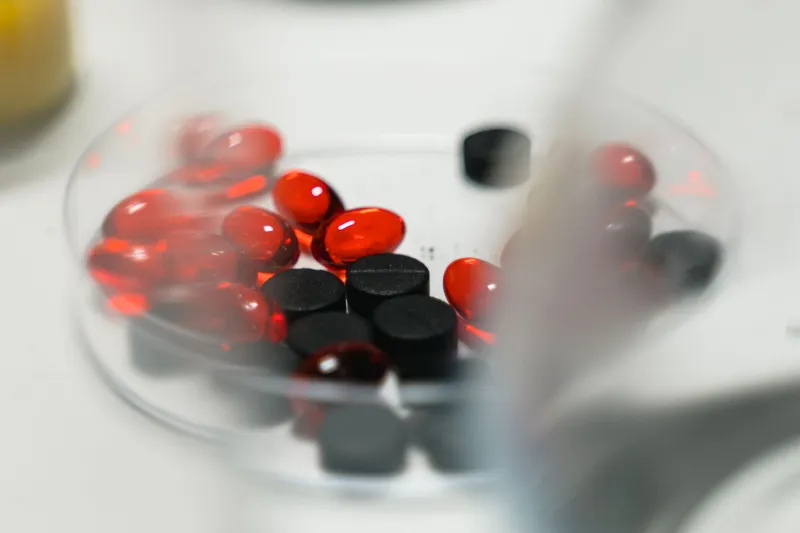
There's a certain satisfaction in popping a gummy vitamin — it's sweet, it's easy, and it feels like a genuinely painless way to support your health. But here's a question worth sitting with: just because a nutrient enters your mouth doesn't mean it ends up where you need it. Bioavailability — the percentage of a nutrient your body can actually absorb and use — is one of the most underappreciated concepts in the supplement world, and gummies have a complicated relationship with it.
That doesn't mean gummies are a bad choice. It means being a smarter consumer pays off.
What Bioavailability Actually Means
Let's start simple. When you swallow a supplement — any supplement — your digestive system goes to work breaking it down. Stomach acid attacks it, digestive enzymes get involved, and eventually nutrients cross the intestinal wall into your bloodstream. The fraction that actually makes that full journey is what scientists call bioavailability.
For some nutrients, this process is pretty efficient. For others, it's genuinely tricky. And the delivery format — whether you're chewing a gummy, swallowing a capsule, or dissolving a powder — can meaningfully shift those numbers.
The Gummy Formula Factor
Gummies aren't just nutrients suspended in thin air. They're a food matrix — typically built from gelatin or pectin, sugar or sugar alcohols, flavorings, colorings, and binding agents. That matrix is part of what makes them enjoyable. It's also part of what makes absorption more complex.
Here's the core issue: fat-soluble vitamins like A, D, E, and K need dietary fat present to absorb efficiently. A standard gummy, especially a low-fat formulation, may not provide enough lipid content to optimize uptake of these nutrients. You might be chewing a vitamin D gummy every morning and getting a fraction of the dose your body could use if the formula were better designed — or if you were taking it alongside a meal with some healthy fat.
Water-soluble vitamins like C and most B vitamins are generally more forgiving. They dissolve readily and don't depend on fat for transport. In that sense, gummies are a reasonable delivery vehicle for this category.
Stomach Acid and the Timing Problem
Your stomach is a harsh environment by design. It's supposed to break things down. The question is whether the nutrients in your gummy survive that process intact — or whether they degrade before they reach the small intestine, where most absorption actually happens.
Certain compounds are more vulnerable than others. Probiotics, for instance, are notoriously sensitive to acid exposure, which is one reason probiotic gummies often require careful enteric formulation to deliver live cultures effectively. Some forms of folate and B12 are similarly sensitive to the digestive environment.
The good news is that reputable manufacturers account for this. Look for gummies that specify the form of each nutrient — methylfolate rather than folic acid, methylcobalamin rather than cyanocobalamin — since these active forms tend to absorb more readily and survive the digestive journey better.
Binders, Fillers, and What They Do to Absorption
Every gummy contains excipients — the technical term for the non-active ingredients that give the product its texture, shelf life, and taste. Some of these are totally inert and don't affect absorption at all. Others can actually interfere.
Certain gummy binders and stabilizers can bind to minerals like iron, zinc, and magnesium, forming compounds that are harder for your intestinal cells to absorb. This is a well-documented phenomenon called chelation, and it's one reason mineral gummies are often considered less efficient than capsule or tablet forms of the same nutrients.
Calcium is a prime example. Calcium carbonate — a common, inexpensive form — requires stomach acid for absorption and doesn't always play nicely in gummy matrices. Calcium citrate is better absorbed and less acid-dependent, but it's bulkier, which is why you don't see it as often in gummies (you'd need a very large gummy to hit meaningful doses).
Which Nutrients Are the Hardest to Deliver in Gummy Form
Not every supplement is equally well-suited to the gummy format. Here's a quick breakdown of where the format struggles most:
- Iron: Poorly absorbed in gummy form due to interactions with binders and the relatively low doses that fit comfortably in a palatable gummy. If you're supplementing iron for a diagnosed deficiency, a capsule or liquid is usually a better bet.
- Magnesium: Similar story. Meaningful therapeutic doses are hard to fit in a gummy without making it unpleasant, and absorption can be inconsistent.
- Omega-3 fatty acids: These require a lipid-rich environment and are difficult to stabilize in a gummy matrix without oxidation issues.
- Vitamin D3: Highly absorbable when paired with fat — but many gummies don't include enough lipid content to optimize this. Taking your vitamin D gummy with a meal containing healthy fats (avocado, nuts, olive oil) makes a real difference.
On the flip side, gummies work quite well for vitamins C, B12, biotin, and zinc — nutrients that absorb efficiently across a range of formats.
How to Actually Get More from Your Gummies
The goal here isn't to scare you off gummies — it's to help you use them smarter. A few practical moves:
Take fat-soluble vitamin gummies with food. Even a small amount of dietary fat can significantly boost absorption of vitamins A, D, E, and K. Don't take these on an empty stomach.
Check the nutrient form on the label. The specific chemical form of a vitamin or mineral matters. Active, bioavailable forms cost more but deliver more. If a gummy uses the cheapest form of every ingredient, that's a signal.
Don't rely on gummies for high-dose mineral supplementation. If your doctor has recommended therapeutic doses of iron, magnesium, or calcium, a gummy is probably not the right vehicle. Use it for maintenance-level support instead.
Consider the full formula. Some gummies include absorption enhancers — black pepper extract (piperine) for curcumin, for instance, or vitamin K2 alongside D3. These thoughtful pairings are worth paying attention to.
The Bottom Line
Gummies aren't magic, and they're not a scam either. They're a delivery format with genuine strengths and some real limitations. Understanding those limitations doesn't mean you need to throw out your gummy routine — it means you can fine-tune it so you're actually getting the benefit you're paying for.
The best supplement is always the one you'll consistently take. For millions of people, gummies are that supplement. Just make sure yours are working as hard as you are.